
Home Workouts vs Gym: Which Gets You Faster Results?
The gym vs. home debate isn't really about location — it's about effort, structure, and consistency. Here's how to make either work for you.

Editorially reviewed
Bassam Mallick · Last reviewed 28 October 2020
Master Nutrition Coach · MSc Kinesiology, Sports & Performance Nutrition · Lifestyle & Metabolic Medicine, Harvard Medical School
Sometime around 2020 the home-gym question stopped being a niche concern and became the default conversation. Clients who'd spent years committed to a gym suddenly couldn't get there. New clients were starting their fitness journey from a yoga mat in a bedroom. Five years later, the question has settled into a more mature form — but it's the same question. After all this experimentation with thousands of clients, what actually works at home, and where does the home setup genuinely fall short of the gym?
The honest answer, after years of coaching clients in both setups: most beginner-to-intermediate goals are entirely achievable at home with a tiny equipment investment. The home setup wins on consistency (no commute, no excuses) and loses on heavy progressive overload past about 18 months of serious training. The deeper truth, though, is that the environment matters less than people think — programming, intensity and showing up consistently are what move the needle either way.
The question comes up constantly: can you really get the same results training at home as you would in a fully equipped gym? The honest answer is yes — but with an important caveat. Your environment matters far less than your effort, your programming, and your commitment to showing up. Whether you're working out in a commercial gym or your living room, the biology of adaptation doesn't change. What does change is how well you manage the variables within your control.
The Case for Home Fitness
For most working adults in India, time and cost are the two biggest barriers to consistent exercise. A gym membership, commute time, and fixed class schedules can make it genuinely difficult to train regularly. Home fitness removes those friction points entirely. You can train at 6 AM before the household wakes up, squeeze in a session at lunch, or work out after dinner — without packing a bag, driving anywhere, or worrying about how you look.
Beyond convenience, there's a real psychological advantage to training in a space that's yours. No waiting for equipment, no social anxiety, no commute eating into your recovery time. For a lot of people, removing those obstacles is the difference between training three times a week and training zero times a week.
What the Gym Does Better
That said, a well-equipped gym genuinely does offer advantages that are hard to replicate at home — at least without significant investment. Progressive overload, the cornerstone of any strength or body-composition programme, is easiest to manage when you have access to a full range of dumbbells, barbells, cables, and machines. Incremental load increases of 1–2.5 kg per session keep your muscles adapting; that's harder to engineer with a single set of adjustable dumbbells.
Gyms also provide access to qualified trainers and, often, a motivating social environment. Watching someone else push hard in the rack next to you has a measurable effect on your own output — sports scientists call it social facilitation. If you're the kind of person who needs external energy to train at your best, a gym setting is genuinely useful.
Building a Home Setup That Actually Works
You don't need to spend a fortune to train effectively at home. A practical starter kit for most goals looks like this:
- Adjustable dumbbells or a set of kettlebells — covers the majority of strength and conditioning work
- Resistance bands — excellent for warm-ups, mobility, and targeted muscle work
- A pull-up bar — one of the best upper-body tools available at any price point
- A yoga mat — for floor work, core training, and stretching
With this setup and a well-designed programme, you can build meaningful strength, improve cardiovascular fitness, and change your body composition. The equipment isn't the limiting factor — the programme and your adherence to it are.
The best workout environment is the one you'll actually use consistently, week after week, for months on end.
The Role of a Structured Plan
One area where home training frequently goes wrong is programming. People start with enthusiasm, cycle through random YouTube workouts, plateau within six weeks, and quit. A structured fitness plan — one with clear goals, progressive overload built in, and defined rest days — prevents this entirely.
If you're new to exercise, or returning after a long break, investing in even a few sessions with a certified personal trainer is worth every rupee. They can assess your movement quality, identify imbalances, and design a programme calibrated to your actual starting point. Rushing into high-intensity training without that foundation is one of the most common routes to injury.
If fat loss is your primary goal, pair your training plan with evidence-based nutrition guidance. A modest caloric deficit combined with adequate protein (1.6–2.2 g per kg of bodyweight per day, depending on training intensity) will accelerate results far more than any single workout ever could.
Discipline Is the Real Variable
Home training has one genuine weakness compared to the gym: accountability. When your workout space is also your bedroom or living room, the couch is always closer than the squat rack. There are no class start times, no trainer waiting for you, no social obligation to show up.
To counter this, treat your home sessions with the same formality you'd give a gym visit. Schedule them in your calendar, set a consistent start time, and track every session in a training log. Seeing your progress on paper — heavier loads, more reps, shorter rest periods — is one of the most motivating things you can do for long-term consistency.
Key Takeaways
- Home fitness can deliver results equal to gym training when your programme is well-structured and you apply genuine effort.
- Gyms have an edge for advanced progressive overload and social motivation; home training wins on convenience and consistency.
- A basic home setup — adjustable dumbbells, bands, pull-up bar, mat — covers the vast majority of fitness goals.
- Work with a certified trainer at least initially to build a programme suited to your goals and movement quality.
- Nutrition is non-negotiable: pair your training with adequate protein and an appropriate caloric intake to see real change.
Where you train is far less important than how intentionally you train. Pick the setting that removes the most barriers for you, build a plan around your specific goals, and commit to it long enough to see genuine adaptation. The results will follow.
Get the weekly note.
Evidence-based nutrition + training, India-context, no fluff. One email a week from Bassam. Unsubscribe anytime.
Keep reading

Gaining Weight? Here's How to Turn It Around for Good
Weight gain is rarely just about willpower. Understanding the real drivers — and fixing them systematically — is how lasting change actually happens.
Read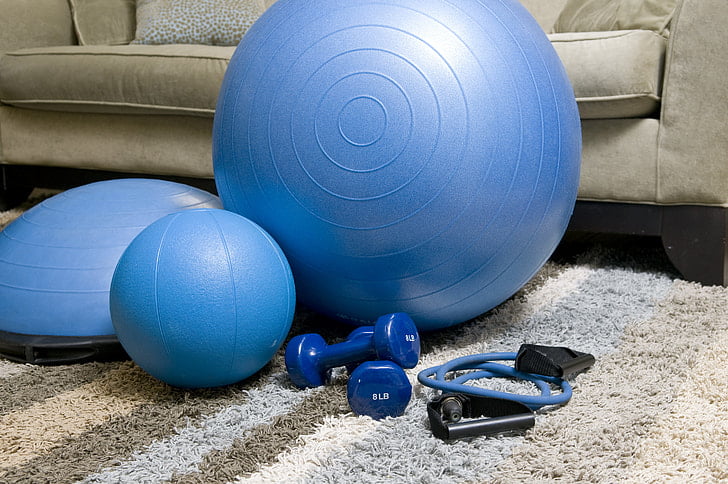
How to Choose Home Gym Equipment That You'll Actually Use
With hundreds of options on the market, buying the wrong equipment is an expensive mistake. Here's how to choose gear that fits your goals, space, and budget.
Read
How to Keep Your Skin Healthy When You're Stuck Indoors
Disrupted routines, stress, and less movement can all show up on your skin. Here's how to protect it without leaving home.
Read