
Gaining Weight? Here's How to Turn It Around for Good
Weight gain is rarely just about willpower. Understanding the real drivers — and fixing them systematically — is how lasting change actually happens.


Editorially reviewed
Bassam Mallick · Last reviewed 6 November 2023
Master Nutrition Coach · MSc Kinesiology, Sports & Performance Nutrition · Lifestyle & Metabolic Medicine, Harvard Medical School
The email shows up on a Tuesday morning. It's a long one. The pattern is so familiar by now that I can almost predict the paragraph break.
Paragraph 1: ‘I eat clean. I walk every day. I don't even have rice anymore.’
Paragraph 2: ‘The scale just keeps creeping up.’
Paragraph 3: ‘What am I doing wrong?’
After 12 years of coaching clients across India, the Gulf and beyond, I've stopped reading these emails as willpower problems. Almost nobody writes to me because they lack discipline. They write because the plan was wrong before they started — and they've been brute-forcing a broken plan with more discipline, getting the same result, and slowly losing faith in their own body.
Weight gain isn't one broken thing. It's usually five small things drifting in the same direction at once: a 200-kcal-creep at dinner you stopped noticing six months ago, a sleep window that shrank from 8 hours to 6 during a busy quarter, a desk job that quietly killed your daily step count, a chronic stress level that's keeping cortisol elevated, and an “I deserve this” weekend that's costing more than it feels like. Each one is small. Stack them, and the scale moves by 4 kg in a year, no single one easy to blame.
Here's the framework I actually use with clients, in the order it should be tackled.
Why Weight Gain Happens (It's Not Just Calories)
Yes, weight gain is technically a sustained energy surplus — you take in more than you use. But that surplus almost never shows up because someone suddenly decided to overeat. It creeps in through a back door — disrupted hunger signals from short sleep, stress-driven cravings from a brutal week at work, a desk job that pulled your daily movement down 400 kcal, ultra-processed snacks engineered to override the body's natural stop signal. Genetics shapes how you store fat, but the levers you can actually move are the lifestyle ones. The first job of any honest plan is to figure out which back door is open for you.
Build Your Workouts Around Resistance Training
If you're only doing cardio to lose weight, you're leaving your most powerful tool in the bag. Resistance training — lifting weights, using resistance bands, or bodyweight training with progressive overload — does something cardio alone cannot: it increases your lean muscle mass, which raises your resting metabolic rate. In simple terms, more muscle means your body burns more calories around the clock, not just during exercise.
Research consistently shows that weight training improves body composition even when the scale doesn't move dramatically, because you're simultaneously losing fat and gaining denser, metabolically active tissue. Aim for at least three resistance sessions per week, targeting all major muscle groups. Pair that with the WHO-recommended 150–300 minutes of moderate-intensity aerobic activity weekly, and you have a genuinely effective combination.
Muscle is the engine of your metabolism. The more of it you carry, the harder your body works even at rest.
Eat in a Moderate Deficit — Not a Crash
Cutting calories aggressively might feel productive, but it tends to backfire. Severe restriction triggers hunger hormones like ghrelin, reduces your metabolic rate, and erodes muscle mass — the opposite of what you want. Instead, aim for a modest deficit of 300–500 kcal per day, which supports roughly 0.3–0.5 kg of fat loss per week without wrecking your metabolism or energy levels.
What your plate should look like
- Protein first: Target 1.6–2.2 g of protein per kg of body weight daily. It preserves muscle, keeps you fuller for longer, and has the highest thermic effect of any macronutrient.
- Fibre-rich carbohydrates: Whole grains, legumes, vegetables, and fruit provide sustained energy and support gut health.
- Healthy fats in moderation: Nuts, seeds, avocado, and oily fish support hormone function and satiety.
- Watch liquid calories: Sugary drinks, packaged juices, and alcohol are some of the most common hidden sources of excess energy in the Indian diet.
Prioritise Sleep — It's Not Optional
Sleep deprivation is one of the most underrated contributors to weight gain. Even a few nights of poor sleep elevates cortisol, suppresses leptin (your satiety hormone), and spikes ghrelin (your hunger hormone) — a combination that makes overeating almost inevitable the next day. Adults need 7–9 hours of quality sleep per night. If your sleep is inconsistent, fixing it may be the single highest-leverage change you can make before worrying about meal timing or advanced training protocols.
Practical steps: keep a consistent wake time even on weekends, reduce screen exposure in the hour before bed, and keep your room cool and dark. Small habits, compounded over weeks, make a measurable difference.
Build Habits, Not Just Motivation
Confidence and motivation are useful sparks, but they're unreliable fuel. What actually drives a body transformation over months is the boring, unsexy work of building consistent habits: prepping food in advance, scheduling your workouts like appointments, tracking what you eat (even loosely), and managing stress before it derails your decisions. Start with one or two changes at a time rather than overhauling everything at once — sustainability always beats short-term intensity.
It also helps to reframe the goal. Instead of chasing a number on the scale, focus on performance — lifting a heavier weight, walking further, recovering faster. These markers keep you engaged when the scale stalls, which it inevitably will at some point.
Key Takeaways
- Weight gain is driven by a sustained energy surplus, often worsened by poor sleep, high stress, and ultra-processed foods — not a lack of willpower.
- Resistance training is essential: it builds muscle, raises your resting metabolic rate, and improves body composition more effectively than cardio alone.
- Aim for a moderate calorie deficit (300–500 kcal/day) with high protein intake (1.6–2.2 g/kg) to lose fat while preserving muscle.
- Prioritise 7–9 hours of sleep — it directly regulates the hunger hormones that influence every food choice you make.
- Sustainable habits beat short bursts of motivation; build your routine around consistency, not perfection.
You don't need a radical transformation plan — you need a sound one. Start with the basics, apply them consistently, and trust that small, well-directed actions compound into real, lasting results. The body you want is built one good decision at a time.
Get the weekly note.
Evidence-based nutrition + training, India-context, no fluff. One email a week from Bassam. Unsubscribe anytime.
Keep reading
- 🫒
The Mediterranean diet adapted for the Indian kitchen (complete guide)
The Mediterranean diet — the most evidence-supported eating pattern in the world — translated honestly into Indian kitchens. The trial evidence, what stays, what swaps, the oils, and a real Indian-Med day.
Read - 🍬
Sugar-free diet: what it actually means and how to do it honestly
What a sugar-free diet really means — added vs natural sugars, where sugar hides in an Indian diet (with grams), the three honest levels, and a realistic 30-day plan you can keep.
Read 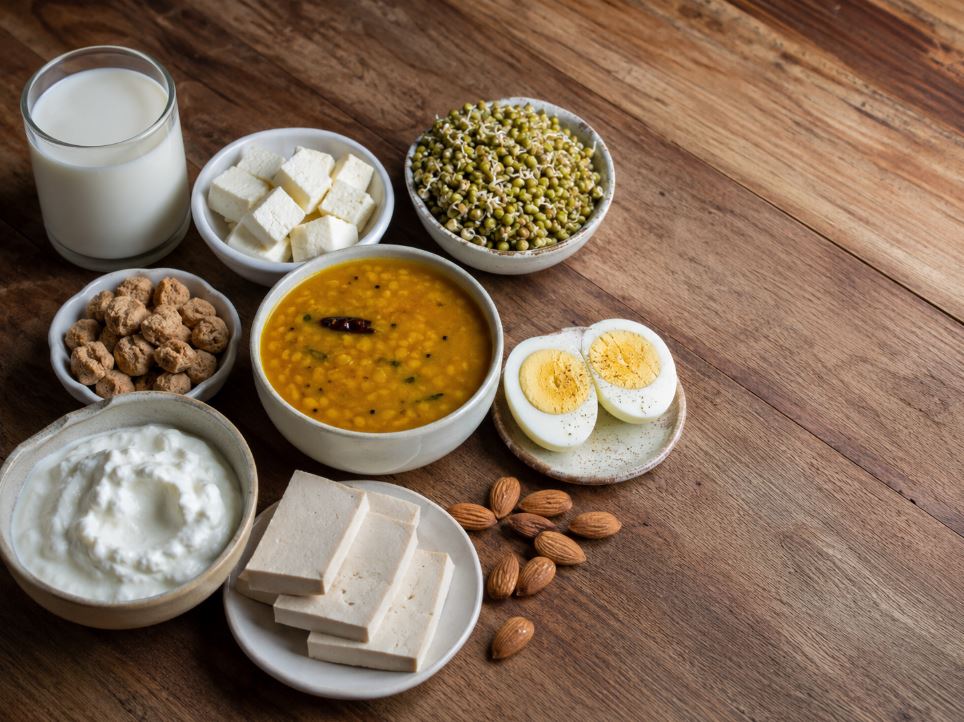
How to hit 100g+ of protein on a vegetarian Indian diet (the complete guide)
A practical, evidence-based guide to hitting 100g+ protein on a vegetarian Indian diet. Real foods, real katoris, three sample days, Jain and vegan notes.
Read