
Insulin resistance and belly fat: the Indian connection (and how to reverse it)
Why Indians get insulin resistance at lower body weights, how it drives stubborn belly fat, and the food, training, sleep and supplement levers that actually move the needle.
Editorially reviewed
Bassam Mallick · Last reviewed 20 May 2026
Master Nutrition Coach · MSc Kinesiology, Sports & Performance Nutrition · Lifestyle & Metabolic Medicine, Harvard Medical School
The single most common pattern I see in Indian clients — men and women, lean and heavy — is some flavour of insulin resistance.
The story always rhymes. A 32-year-old IT professional who isn't visibly overweight but carries a soft pouch around the navel. A 28-year-old woman with PCOS, irregular cycles, and 6 kg that has refused to move for three years. A 45-year-old uncle whose BMI is fine but whose triglycerides and fasting insulin are not. They all eat "moderately." None of them can figure out why fat loss feels like pushing a car uphill.
The common thread is what their cells are doing with insulin. And before I go any further: if you have symptoms, see a doctor first. This piece is education, not medical advice. Insulin resistance, fatty liver, PCOS and type 2 diabetes are medical conditions that deserve a proper workup. What I'll do here is explain the mechanism honestly, tell you what the evidence supports on the lifestyle side, and tell you what to ignore.
What insulin resistance actually is
Strip away the jargon. Every time you eat — especially carbohydrates — your blood sugar rises. Your pancreas releases insulin, a hormone whose job is to escort that sugar out of your blood and into your cells, where it gets burned for energy or stored.
In insulin resistance, the cells stop responding properly to insulin's knock at the door. The pancreas, sensing that blood sugar is still high, pushes out more. Then more. For a long time — sometimes years — your blood glucose looks "normal" on a routine test, because the pancreas is compensating. But insulin itself is quietly running high all day.
Chronically high insulin is the actual problem. It promotes fat storage (particularly around the abdomen), suppresses fat burning, drives hunger and carb cravings, contributes to inflammation, and slowly wears the pancreas out. Left alone long enough, the pancreas can't keep up, blood sugar starts climbing, and that's the door to type 2 diabetes.
So when I tell a client "we're not just chasing weight, we're improving how your cells respond to insulin," this is what I mean. Not detoxing, not resetting metabolism — improving cellular sensitivity to one hormone.
Why this is an Indian problem in particular
Indians are not metabolically the same as Western populations. Researchers have spent decades describing what's sometimes called the Asian Indian phenotype (Yajnik & Yudkin, Lancet, 2004): a tendency toward higher body fat (especially visceral and abdominal), lower lean muscle mass, higher insulin resistance and worse lipid profiles at any given body weight compared to people of European ancestry.
The practical version: an Indian man with a BMI of 23 — well within "normal" globally — can carry the same visceral fat and metabolic risk as a European man with a BMI of 27. The WHO has suggested lower BMI cutoffs for South Asians for this reason.
This is why I refuse to use BMI alone with Indian clients. I look at waist circumference, waist-to-height ratio, lab markers, and whether the person has the typical "thin outside, soft middle" body shape. Many clients hear from their GP that they are "fine" because their weight is normal, and then they show me fasting insulin and triglycerides that say otherwise.
Layered on genetics is environment. Urban Indian life — long sitting hours, daily chai with two spoons of sugar, white rice or refined-flour roti dominating the plate, mithai at every festival, sugary lassi or soft drinks with lunch, late dinners, short sleep, chronic stress — is almost designed to drive insulin resistance. The genes load the gun; the lifestyle pulls the trigger.
Insulin resistance rarely travels alone. It co-exists with PCOS in women, with non-alcoholic fatty liver, with pre-diabetes, and with the cluster of high blood pressure, high triglycerides, low HDL and abdominal obesity called metabolic syndrome. If you have one, screening for the others is reasonable.
The belly fat connection
Belly fat is not just cosmetic. Visceral fat — the fat packed around your liver, pancreas and intestines, behind the abdominal wall — is metabolically active tissue. It secretes inflammatory signals and fatty acids directly into the portal circulation that feeds the liver.
Here's the loop that traps so many of my clients:
- Insulin resistance pushes more fat into storage, preferentially in the abdomen.
- Visceral fat releases inflammatory cytokines and free fatty acids.
- Those signals worsen insulin resistance in the liver and muscle.
- Insulin levels climb further. More belly fat. More inflammation.
- Repeat.
This is why belly fat in the insulin-resistant Indian feels uniquely stubborn. You're not failing at willpower. You're fighting a self-reinforcing loop. The good news: it also runs in reverse — when you start improving insulin sensitivity, visceral fat is usually the first to leave, because it's the most metabolically active.
You're not failing at willpower — you're fighting a self-reinforcing loop: high insulin stores belly fat, belly fat worsens insulin resistance, repeat. Break it at the muscle and the plate, and it unwinds in the same direction.
Symptoms worth getting a doctor to investigate
You can't diagnose insulin resistance from how you feel. But there are signals that should send you to a doctor for a proper lab workup:
- Crashing energy in the afternoon, especially after a carb-heavy lunch
- Intense cravings for sugar or refined carbs, particularly in the evening
- Dark, velvety patches of skin on the back of the neck, armpits or knuckles — this is called acanthosis nigricans and is a fairly specific marker
- Irregular cycles, acne, unwanted hair growth in women — PCOS and insulin resistance overlap heavily
- Weight that refuses to move despite a reasonable diet
- A waist circumference over 90 cm in Indian men or 80 cm in Indian women
- A close family history of diabetes
When you see your doctor, the tests worth asking about are fasting insulin (not just fasting glucose), HbA1c, a lipid panel (especially triglycerides and HDL), and liver enzymes (ALT). From fasting glucose and fasting insulin, the doctor can calculate HOMA-IR, which estimates how insulin-resistant you are. Let your doctor interpret it.
If your doctor finds something, treat it like any other medical condition. There is no shame in starting metformin or any other prescribed medication. These are legitimate, well-studied tools, and they work alongside lifestyle change, not against it. I have lost count of how many clients have made beautiful progress on metformin plus a good plan, and I have no patience for online voices that demonise it.
The food fix that genuinely works
You do not need a "diabetes diet" or a low-carb monastery. You need a plate that doesn't spike insulin five times a day.
The principles that matter, in order of impact:
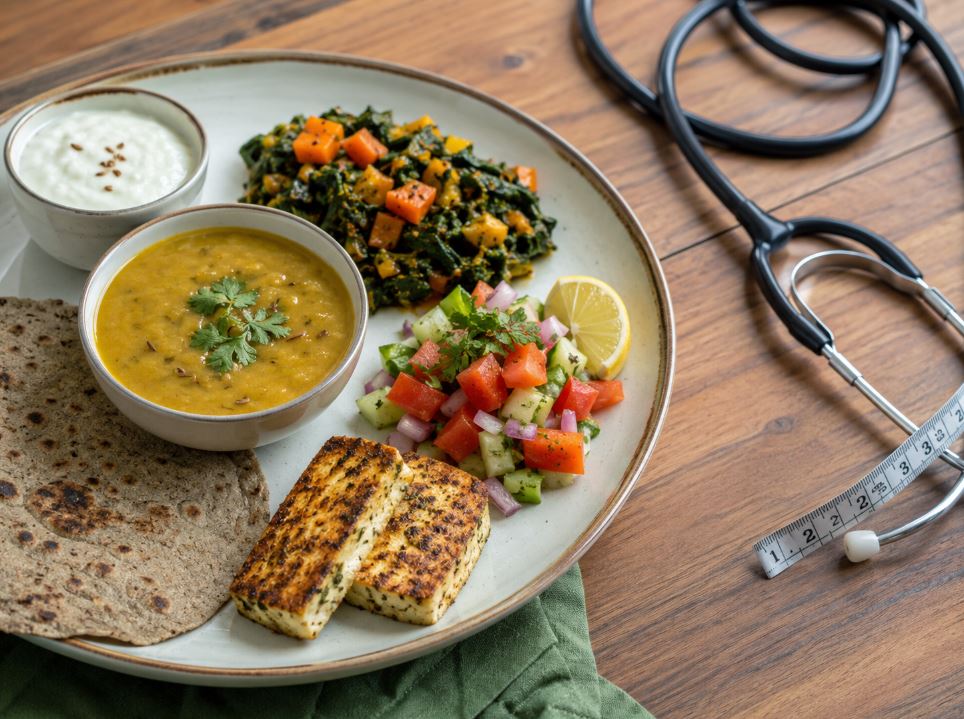
Protein at every meal. This is the first change I make with every insulin-resistant client. Protein blunts the glucose spike of a meal, increases satiety, and feeds the muscle that becomes your biggest glucose sink. Aim for roughly a palm-sized portion — paneer, eggs, dal-plus-curd, soy chunks, chicken, fish — at breakfast, lunch and dinner. If you're vegetarian and struggling, I wrote a full guide on 12 high-protein Indian vegetarian meals.
Carbs that are slow, not fast. I'm not anti-rice. I'm anti-mountain-of-white-rice with nothing to slow it down. Swap a portion of white rice for brown rice, hand-pounded rice, or millets — ragi, jowar, bajra, foxtail. Drop chapati count from four to two and add a second sabzi. Fewer refined carbs and more fibre at every meal, not zero carbs.
Fibre as a permanent fixture. Vegetables, dal, sprouts, whole fruit (not juice), salads before the meal. Fibre lowers post-meal glucose. A simple cucumber-tomato-onion salad before the main meal is one of the cheapest interventions I know.
Sugar in chai, and daily mithai, are the easy wins. A two-sugar chai four times a day is roughly 80 calories of pure sucrose, four glucose spikes. Most clients drop this in two weeks and notice the difference. Festival mithai is fine. Daily mithai is the problem.
Ultra-processed food and sugary drinks are the worst offenders. Biscuits, namkeen, packaged juice, soft drinks, sweetened lassi, energy drinks, most "healthy" breakfast cereals. They're designed to be over-consumed and they slam your blood sugar. If you cut nothing else, cut these.
This is not glamorous. There is no superfood. The plate I'd build for an insulin-resistant client is: one palm of protein, one fist of slow carb, two fists of vegetables, a thumb of healthy fat, water. Three times a day. That's it.
The training fix that moves the dial fastest
If I could prescribe one intervention for insulin sensitivity, it would be resistance training. Not cardio. Not yoga. Resistance training.
The reason is mechanical, not motivational. Skeletal muscle is the single biggest disposal site for blood glucose in your body — and strength training has been shown to increase insulin-mediated glucose uptake and the glucose-transport machinery inside muscle, even in people who already have type 2 diabetes (Holten et al., Diabetes, 2004). The more muscle you have, and the more often you contract it hard against resistance, the more glucose it pulls out of your blood — partially independently of insulin. You're building a bigger glucose sink.
Three full-body sessions a week — squats, hinges, presses, rows, carries — is enough. You don't need to look like a bodybuilder; you need to load your muscles. The most common objection I hear from Indian women is that lifting will make them "bulky." It won't. It will make them metabolically healthy. I built The Strong Woman's First Program for exactly this audience.
For men carrying belly fat, The 12-Week Fat Loss Manual is the standard starting point — it pairs resistance training with the food principles above.
The second training intervention with surprisingly strong evidence is a simple post-meal walk. A 10–15 minute walk after your largest meal measurably lowers the post-meal glucose spike — a review confirmed that even light walking after eating beats sitting for blunting blood sugar (Buffey et al., Sports Medicine, 2022). No equipment, no gym, no app. Eat dinner, walk fifteen minutes, come home.
Cardio is useful but underpowered compared to lifting. If you enjoy running or cycling, do it. If you don't, don't force it. Lifting plus walking is enough.
The non-food multipliers
Three things outside the kitchen and gym move insulin sensitivity meaningfully:
Sleep. Seven to nine hours. A single bad night measurably worsens insulin sensitivity the next day. Chronic short sleep — the urban Indian default of 5–6 hours plus a phone in bed — is a major, underrated driver of metabolic dysfunction. Treat sleep like training: non-negotiable, scheduled, protected.
Stress. Cortisol is insulin's chemical opponent. Chronic stress keeps cortisol elevated, which raises blood sugar and undermines everything else. I won't tell you to meditate if you'll never do it. But find something — walks, prayer, breathwork, a hobby unrelated to your job, time off your phone — and do it consistently. Stress management is a primary lever, not a soft factor.
Alcohol low, smoking zero. Alcohol — especially beer and sugary cocktails — adds calories, disrupts sleep, and stresses the liver, the organ most central to insulin resistance. Smoking independently worsens insulin sensitivity. If you do either heavily, addressing it will outperform any supplement on the market.
The supplement honest read
Most "blood sugar formulas" sold online are overpriced multivitamins with a marketing budget. Here's what the evidence supports, with the caveat that supplements are adjuncts, not foundations, and you should run them past your doctor — especially if you're on medication.
Inositol. The best-evidenced supplement for insulin resistance, particularly in women with PCOS. Myo-inositol, often combined with d-chiro-inositol, has reasonable trial data for improving insulin sensitivity and menstrual regularity. The one I'd consider first for a PCOS client, with their doctor's nod.
Berberine. Promising data for blood sugar control, sometimes compared to metformin in older studies. The catch: it interacts with several medications and can cause GI upset. Don't start it without telling your doctor, especially if you're on anything for blood sugar or blood pressure.
Vitamin D. Worth testing for. Deficiency is rampant in India despite the sunshine; correcting a real deficiency is reasonable. Megadoses without a blood test are not.
Magnesium. Many Indians eat low-magnesium diets and magnesium plays a role in glucose metabolism. Glycinate or citrate forms, evening dose, modest.
Be sceptical of anything sold as a "diabetes cure," a "metabolism reset" or a "blood sugar miracle."
What insulin resistance is not
It is not a "toxin." It's not something you "detox" out with green juice. It is not curable in seven days, fourteen days, or by any cleanse. There is no metabolism that needs "resetting" — your metabolism is fine; your cells are less responsive to a hormone.
It's also not something to expect to reverse in a month. Insulin resistance is built over years of cellular and behavioural pattern. The lifestyle improvements I've described work — really work — but over months and quarters, not days. Visceral fat usually moves before scale weight does. Lab markers can shift meaningfully in 8–12 weeks with consistent training, food and sleep. Genuine, durable change in insulin sensitivity is a months-to-years process, sometimes with medication, always with lifestyle as the foundation.
And it's not something to feel ashamed of. The Indian metabolic deck is stacked against us. Recognising it and rowing in the other direction isn't a failure of discipline — it's one of the most empowering decisions you can make for your long-term health.
When you need a doctor, not a coach
If you're experiencing any of the following, this is not the place to be — your GP or endocrinologist is:
- Extreme, unrelenting thirst
- Frequent urination, especially at night
- Unexplained weight loss
- Persistent fatigue that doesn't lift with sleep
- Blurred vision
- Slow-healing cuts or recurrent infections
These can be signs of undiagnosed or poorly controlled diabetes, and they need medical evaluation. Do not self-treat. Do not wait for your next monthly plan. Go.
Where to start, in order
If you've read this far, here is the order I'd suggest:
- See a doctor. Get fasting insulin, HbA1c, a lipid panel and liver enzymes. Get a baseline.
- Fix the obvious food levers. Protein at every meal, sugar out of chai, mithai down to occasional, ultra-processed food out of the daily rotation. Walk fifteen minutes after dinner.
- Start lifting. Three sessions a week, full body. If you don't know how, follow a program rather than improvising.
- Protect sleep and manage stress. These are not soft factors. They are levers.
- Add supplements last, with medical supervision, only after the foundations are in.
If you have PCOS or you suspect insulin resistance is driving stubborn belly fat, The PCOS & Insulin-Resistance Plan is the manual I'd start you on. You can read Chapter 1 free before deciding.
If inflammation, bloating and gut symptoms are riding alongside the metabolic story, The Anti-Inflammatory Reset is a sensible companion.
If you just want a personalised week of meals built around your numbers to start with, the free diet plan builder is a fine entry point — set your preferences, get a week, eat from it.
Insulin resistance is not a sentence. It's a signal. Take it seriously, work with your doctor, and play the long game. The Indian body responds — slowly, honestly, durably — when you give it the right inputs over enough time.
Frequently asked questions
Can insulin resistance be reversed with diet and exercise?
Yes — improving it is one of the best-evidenced things lifestyle can do. The landmark Diabetes Prevention Program showed structured diet and exercise cut progression to diabetes by 58%, outperforming metformin. It's not a quick fix: insulin resistance is built over years, so genuine, durable change takes months to quarters, with visceral fat usually moving before scale weight and lab markers shifting meaningfully in 8–12 weeks. Medication (like metformin) can be a legitimate part of the plan — it works alongside lifestyle, not against it. Always involve your doctor.
What is the best exercise for insulin resistance?
Resistance training, ahead of cardio or yoga. Skeletal muscle is the body's single biggest disposal site for blood glucose, and strength training has been shown to increase insulin-mediated glucose uptake even in people with type 2 diabetes — you're literally building a bigger glucose sink. Three full-body sessions a week (squats, hinges, presses, rows) is enough. Add a 10–15 minute walk after your largest meal, which directly lowers the post-meal glucose spike. Cardio helps but is underpowered next to lifting; do it if you enjoy it.
What foods should I eat to lower insulin resistance?
Build every plate around protein (a palm-sized portion — paneer, eggs, dal-plus-curd, soya, chicken, fish), which blunts the glucose spike and feeds the muscle that clears blood sugar. Swap fast carbs for slow ones (millets and brown rice over big portions of white rice and maida), add fibre at every meal (vegetables, dal, a salad before the meal), and cut the easy wins: sugar in chai, daily mithai, and ultra-processed snacks and sugary drinks. You don't need zero carbs — you need a plate that doesn't spike insulin five times a day.
Why do I have belly fat and insulin resistance even though I'm not fat?
Because of the Asian Indian phenotype — Indians carry more visceral (deep abdominal) fat, less muscle, and more insulin resistance at any given BMI than Western populations. An Indian man with a 'normal' BMI of 23 can carry the metabolic risk of a European at 27, which is why WHO uses lower South Asian cut-offs. So the scale and BMI can look fine while your fasting insulin, triglycerides and waist say otherwise. Track your waist (over 90 cm in men, 80 cm in women is a flag) and ask your doctor for fasting insulin, not just fasting glucose.
Do supplements like inositol or berberine help insulin resistance?
They're adjuncts, not foundations, and belong on top of the food, training and sleep work — not instead of it. Inositol has the best evidence, especially for women with PCOS-related insulin resistance. Berberine has promising blood-sugar data but interacts with several medications and can upset the gut, so never start it without telling your doctor. Correcting a genuine vitamin D deficiency (test first) and adequate magnesium are reasonable. Be sceptical of anything sold as a 'blood sugar miracle' or 'metabolism reset' — and clear any supplement with your doctor if you're on medication.
References
- [1]
Yajnik CS, Yudkin JS (2004). The Y-Y paradox (the thin-fat Indian and the Asian Indian phenotype). The Lancet, 363(9403):163.
View source - [2]
Holten MK, Zacho M, Gaster M, Juel C, Wojtaszewski JFP, Dela F (2004). Strength training increases insulin-mediated glucose uptake, GLUT4 content, and insulin signaling in skeletal muscle in patients with type 2 diabetes. Diabetes, 53(2):294-305.
View source - [3]
Buffey AJ, Herring MP, Langley CK, Donnelly AE, Carson BP (2022). The acute effects of interrupting prolonged sitting time in adults with standing and light-intensity walking on cardiometabolic health. Sports Medicine, 52(8):1765-1787.
View source - [4]
Knowler WC, Barrett-Connor E, Fowler SE, et al. (Diabetes Prevention Program) (2002). Reduction in the incidence of type 2 diabetes with lifestyle intervention or metformin. New England Journal of Medicine, 346(6):393-403.
View source