
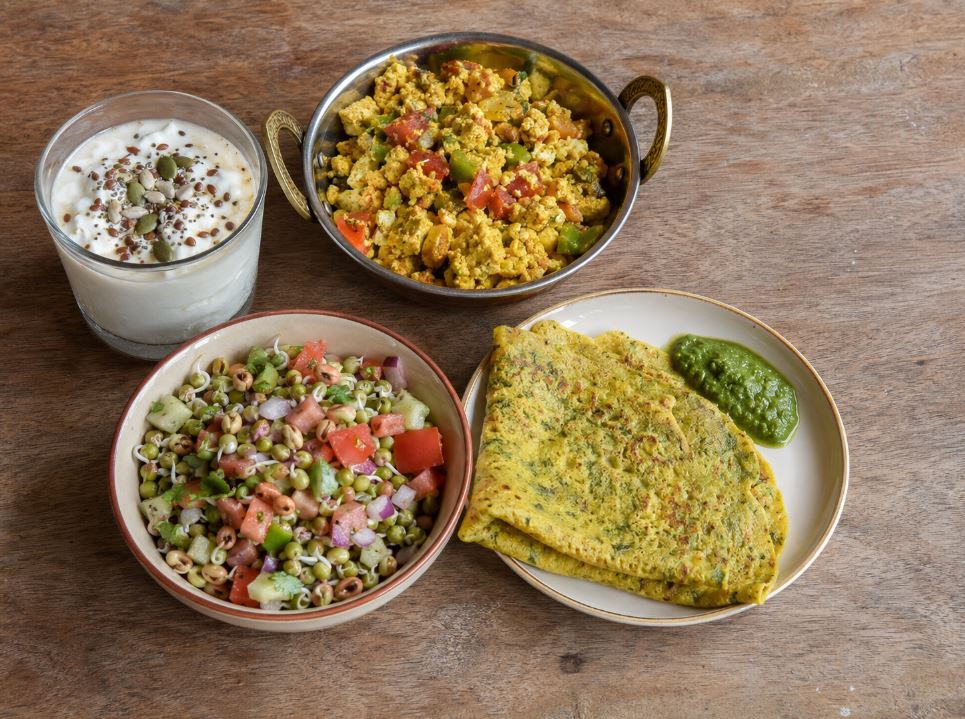
12 high-protein Indian vegetarian meals (with macros)
Hitting 1.6–2.2g/kg of protein on a vegetarian diet feels impossible — until you have the right meals. These twelve get you to 25–35g of protein each.
Editorially reviewed
Bassam Mallick · Last reviewed 15 March 2026
Master Nutrition Coach · MSc Kinesiology, Sports & Performance Nutrition · Lifestyle & Metabolic Medicine, Harvard Medical School
The single most frequent objection I hear from vegetarian clients — across age, gender, city, and goal — is some version of this: "I can't hit my protein numbers. I've tried. There's not enough protein in the food I actually eat at home."
It's a fair objection. Most everyday vegetarian Indian meals — two rotis with dal and sabzi, or a bowl of rice with rajma — sit at 10–15 g of protein per plate. To hit the 100 g/day mark that lifting clients need, you would have to eat eight of those plates a day. Nobody does that. The objection isn't laziness; it's that the standard Indian vegetarian meal architecture genuinely doesn't deliver.
The fix isn't switching to non-veg, supplementing aggressively, or living on whey shakes. It's that there is a quieter category of vegetarian Indian meals — built around paneer, tofu, dal-doubled bowls, soya, curd, and a few smart pairings — that pulls 25–35 g of protein per serving with no exotic ingredients. After more than a decade of coaching Indian vegetarians, these are the twelve I rotate through client plans the most. But before the list, it helps to understand why plant protein is genuinely harder, and what to do about it at the planning level.
Why vegetarian protein is harder (the actual biology)
Three real biological factors separate plant protein from animal protein. Once you understand them, the meal architecture clicks into place.
Factor 1: DIAAS digestibility
DIAAS (Digestible Indispensable Amino Acid Score) is the FAO's current gold-standard measure of how usable a protein source is for human muscle and tissue. The scoring runs from 0 to ~1.2:
- Whey concentrate / isolate — ~1.09
- Milk / paneer / curd — ~1.18
- Egg — ~1.13
- Soya isolate / tofu — ~0.91
- Chickpeas / chana — ~0.83
- Wheat / atta — ~0.40
- Rice — ~0.59
- Most dals (urad, moong, masoor) — ~0.65–0.75
- Mung beans / sprouts — ~0.70
A DIAAS of 1.0 means 100% of the indispensable amino acids in that food are bioavailable for human use. A DIAAS of 0.7 means only 70% are actually usable — the rest is excreted, used for non-muscle pathways, or limited by a missing amino acid.
The practical translation: 25 g of paneer protein and 25 g of dal protein are not equivalent in muscle-building terms. The dal contributes roughly 17 g of "usable" protein after the digestibility adjustment. This is why "I eat dal every day" doesn't necessarily mean a vegetarian is meeting their protein target — the label number and the muscle-relevant number can differ by 20–30%.
Factor 2: The leucine threshold
Muscle protein synthesis (MPS) requires a specific signal — a dose of the amino acid leucine above roughly 2.5–3 g per meal is what flips the MPS switch. Below threshold, no MPS bump from that meal. Above, full effect.
Most plant proteins are lower in leucine relative to total protein than animal sources. For an Indian vegetarian:
- 100 g paneer → ~1.9 g leucine
- 100 g tofu → ~1.6 g leucine
- 100 g cooked soya chunks → ~2.4 g leucine
- 100 g dal (cooked) → ~0.5–0.6 g leucine
- 1 large egg → ~0.5 g leucine
A meal of 1 katori dal (~15 g protein, ~0.9 g leucine) is genuinely subthreshold — it delivers calories and amino acids for maintenance, but does not maximally trigger MPS. A meal of 150 g paneer or 100 g soya chunks (~3.0 g+ leucine each) clears threshold and properly drives the muscle-building signal.
This is the single most important architecture insight for Indian vegetarians: at least one meal a day needs to be built around soya, paneer, tofu, or a protein shake to clear the leucine threshold even once. Two such meals across the day is the working target.
Factor 3: Anti-nutrients and digestibility blockers
Several Indian vegetarian protein sources contain phytates, lectins, or trypsin inhibitors that reduce protein absorption. Mostly:
- Raw or under-soaked legumes — phytates can reduce mineral and protein absorption by 30–50%.
- Whole wheat in very large amounts — phytates again, mostly relevant if atta is the dominant carb.
The fix is simple and traditional Indian cooking already does it: soak, sprout, ferment, pressure-cook. Overnight-soaked rajma cooked to softness is dramatically more bioavailable than a quick boil. Idli/dosa batter is fermented dal+rice and has near-doubled bioavailability of the underlying lentils. The grandmother methods work.
25 g of paneer protein is not the same as 25 g of dal protein. The label number and the muscle-relevant number can differ by 20–30%. Architecture matters more than total.
The architecture: how to build a high-protein vegetarian day
Once you internalise DIAAS + leucine, the daily architecture becomes obvious:
- 2–3 "anchor" meals per day built around a high-leucine, high-DIAAS source — soya, paneer, tofu, or eggs (if lacto-ovo).
- 1–2 "filler" meals using dal, chana, rajma, sprouts — for total intake and fibre but not relied on alone for MPS triggering.
- 1 protein-rich snack — Greek yogurt, roasted chana + curd, or a plant-based protein shake.
- Total daily ~15–20% higher than the equivalent non-vegetarian target, to compensate for the average lower DIAAS across the day.
A non-vegetarian 70 kg active adult might target 140 g/day. The equivalent vegetarian target is closer to 160–170 g/day, organised across 4 meals of ~40 g each (3 anchors + 1 filler or snack).
The 12 meals — breakfast (25–35 g protein)
1. Paneer bhurji with 2 rotis
100 g paneer scrambled with onions, tomato, capsicum + 2 whole-wheat rotis ~28 g protein · ~480 kcal
The leucine workhorse breakfast — paneer is the highest-leucine, highest-DIAAS dairy protein readily available in India. Clears the MPS threshold on its own.
2. Tofu scramble with avocado toast
150 g tofu with turmeric, black pepper + 1 slice multigrain toast + ½ avocado ~24 g protein · ~420 kcal
Vegan-friendly anchor breakfast. Tofu's leucine is borderline — at 150 g you're right at the 2.4–2.5 g threshold. Add a tablespoon of pumpkin seeds for an extra 4 g protein and an extra leucine bump.
3. Sprouts + Greek yogurt
1 cup mixed sprouts chaat + 150 g plain Greek yogurt on the side ~32 g protein · ~290 kcal
Lighter breakfast. The Greek yogurt is doing most of the protein work (~15 g); sprouts add ~9 g but with lower DIAAS. Together they clear threshold cleanly and the chickpea base of the sprouts adds fibre.
Lunch (25–40 g protein)
4. Paneer tikka quinoa bowl
150 g grilled paneer tikka + ¾ cup cooked quinoa + 2 tbsp mint-curd chutney ~34 g protein · ~580 kcal
The single most protein-dense lunch in the rotation. Quinoa is the only common grain with a near-complete amino acid profile (DIAAS ~0.78) and pairs naturally with the paneer.
5. Soya chunk curry + 2 rotis
1 cup soya chunk curry (60 g dry soya cooked) + 2 whole-wheat rotis + small dal tadka side ~36 g protein · ~520 kcal
Soya chunks are the highest-leucine plant protein widely available in India. One cup delivers ~25 g protein with leucine well above threshold. The dal side is for the meal experience, not the protein math.
6. Chana masala + brown rice + raita
1 cup chana masala + ¾ cup brown rice + ½ cup curd raita ~28 g protein · ~510 kcal
Classic complementary protein: chickpeas (lysine-rich, methionine-low) + brown rice (methionine-rich, lysine-low) eaten together give a more complete amino acid profile than either alone. The raita adds dairy protein to push leucine into the comfortable range.
7. Rajma chawal + paneer side
1 cup rajma + ¾ cup brown rice + 60 g grilled paneer cubes ~30 g protein · ~640 kcal
Same logic as #6 — rajma + rice as the complementary pair, paneer as the leucine-clearing anchor. Highest-calorie meal in the rotation, suited to gain phases or post-training lunches.
Dinner (25–35 g protein)
8. Stir-fry tofu with vegetables
150 g tofu + mixed seasonal veg + soy-ginger sauce ~28 g protein · ~360 kcal
Lean, vegan, leucine-borderline-okay at this dose. Pair with brown rice (~80 g cooked) for a more complete dinner without breaking the calorie budget.
9. Palak paneer + 1 roti
1 cup palak paneer (cooked with minimal oil) + 1 whole-wheat roti ~26 g protein · ~440 kcal
Restaurant-style version is ~700 kcal; the home version with proper portion control is ~440 kcal. Same protein, half the calories.
10. Moong dal khichdi + paneer cubes
1 cup mixed moong dal khichdi + 60 g grilled paneer cubes ~28 g protein · ~480 kcal
Best "comfort food" option. Khichdi is the canonical lentil + rice complementary protein. The paneer adds the leucine anchor that pure khichdi misses.
Snacks (15–25 g protein)
11. Whey shake + roasted chana
1 scoop whey isolate in water + 30 g roasted chana ~32 g protein · ~260 kcal
The cleanest high-protein snack in the rotation. Whey isolate is the highest-DIAAS, highest-leucine protein on earth (DIAAS ~1.09). For vegans, substitute with a soya or pea+rice blend.
12. Greek yogurt + berries + seeds
150 g plain Greek yogurt + ½ cup berries + 1 tbsp pumpkin seeds ~22 g protein · ~220 kcal
The lightest snack option. Particularly good as a pre-sleep meal — Greek yogurt is naturally casein-dominant, slow-digesting, and supports overnight MPS (Trommelen & van Loon 2016).
How to actually use this
Pick one breakfast, one lunch, one dinner, and one snack every day. That's already 100–120 g of protein from four meals — enough for most active 60–70 kg adults to hit their 1.6–2.0 g/kg target.
Rotate the meals across the week, but don't over-rotate. Same breakfast for 3–5 days in a row is fine — it's frictionless, not boring. The clients who do best on this rotation pick 5–6 of the 12 meals as a working set and cycle inside that, with 1–2 weekend "social" meals outside the templated structure.
If your number is higher — say you weigh 80 kg and need 150 g of protein — add a second snack or upgrade one meal to its larger version (200 g paneer instead of 150 g, 1 cup soya chunks instead of ¾, an extra whole egg or two if you eat eggs).
Jain, vegan, and lactose-intolerant adjustments
These are the three most common variant requirements I get asked about:
- Jain (no onion/garlic, no root vegetables): lean on paneer + curd + soya + buttermilk-based dals. Drop meals #1 and #5 if onion is non-negotiable; replace with paneer-tomato-capsicum bhurji and soya-tomato-capsicum curry. Total daily protein easily hits 100–130 g.
- Vegan (no dairy): drop paneer, Greek yogurt and curd. Lean on tofu, tempeh, soya chunks, lentil-rich dals, and a daily plant-protein shake (pea + rice blend or soya isolate). The daily protein target is achievable but the per-meal leucine math is tighter — most vegan clients benefit from a 30 g shake to anchor at least one meal.
- Lactose-intolerant: paneer is much lower in lactose than milk and often tolerated. Greek yogurt has live cultures that break down lactose during fermentation and is often the most-tolerated dairy. If neither works, follow the vegan pattern above.
The bigger picture
A vegetarian high-protein diet is harder than a non-vegetarian one. It needs more planning, more dairy-or-soy-or-legumes, and more deliberate meal design. The DIAAS and leucine math is real, not pedantry — it's the reason "I eat lots of dal" doesn't always translate into the muscle outcome the person expected.
But once you have a rotation of 8–10 meals you actually like, the math handles itself. Two anchor meals + a filler + a snack lands you on target every single day with no spreadsheet. The friction in vegetarian high-protein eating isn't biological — it's that the standard meal patterns we grew up on were architected for a different goal. Build the architecture for your actual goal and the food gets a lot easier.
Want a full week of these built around your exact calorie and protein target? The free diet plan builder lets you set diet preference to "Vegetarian" and generates a personalised week from this kind of meal list. Use the protein calculator to back-calculate your per-day target first.
Frequently asked questions
Can I really build muscle on a vegetarian diet, or is it always worse than non-veg?
You can absolutely build muscle on a vegetarian diet. The well-controlled comparison studies — including a 2021 RCT by Hevia-Larraín et al. comparing soy-based vegan vs animal-protein-based diets at matched total protein — found no difference in muscle gain when total protein and per-meal dosing were equated. The qualifier is real though: matched. Vegetarians need ~15–20% more total daily protein and tighter per-meal dosing to truly equate. Once that's done, outcomes match.
Is soya safe? I keep reading conflicting things online.
The mainstream evidence is unambiguous that moderate soya intake (1–2 servings/day) is safe and healthy for both men and women. The phytoestrogen scare came from misinterpreting in-vitro studies; large meta-analyses in humans show no effect of moderate soya on testosterone, oestrogen, breast cancer risk, or thyroid function in iodine-sufficient adults. Vegetarian clients who get 30–40 g protein/day from soya products have done so for decades in this practice with no observable issues.
How do I tell if I'm actually short on protein? What are the signs?
Persistent muscle loss despite training, slow recovery between workouts, prolonged hunger after meals, hair shedding more than usual, slow wound healing, frequent illness or fatigue — these are the cluster. None are protein-specific in isolation, but when several appear together in a self-reported vegetarian with moderate intake, low-protein is usually the underlying cause. The single cleanest diagnostic is to track honestly for one week using a food scale and see whether you're really hitting 1.4 g/kg minimum.
Do I need to combine specific proteins at every meal to get 'complete' amino acids?
Not strictly. The old 'complementary proteins must be eaten in the same bite' idea (the 1971 Lappé framework) has been retired. The current understanding is that the body maintains a circulating pool of amino acids from recent meals, so combining within a few hours is sufficient — and across a varied day, most vegetarians naturally hit completeness without trying. The meals in this list pair complementary proteins where possible (rice+dal, chana+rice, khichdi) because it's good practice, not because it's a strict requirement.
I'm 60+ and vegetarian. How does this change for me?
The per-meal leucine threshold rises with age — older adults experience anabolic resistance, so the same dose triggers less MPS than at 25. For Indian vegetarians over 60, push every anchor meal to ~35–40 g of high-DIAAS protein (200 g paneer or curd instead of 150 g, full cup soya chunks instead of three-quarters). The PROT-AGE guidelines suggest minimum 1.2 g/kg for healthy older adults, with 1.6–2.0 g/kg as the target for active ones. Combine with at least two resistance-training sessions per week — diet alone won't prevent sarcopenia.
Is whey 'not vegetarian'? My family doesn't eat anything labelled with that ingredient.
Whey is a milk derivative, so technically vegetarian (lacto-vegetarian) but not vegan. Most observant Indian vegetarian families consume whey-derived products (paneer, curd, ghee, ice cream) every day. If your home avoids whey specifically because of fermentation or rennet concerns, look for whey labelled 'rennet-free' or 'microbial rennet' — these use plant-derived enzymes. Plant-protein blends (pea+rice, soya isolate) are the cleanest substitute and now widely available in India.
References
- [1]
FAO Expert Working Group (2013). Dietary protein quality evaluation in human nutrition (DIAAS methodology and protein quality scoring). FAO Food and Nutrition Paper, 92.
View source - [2]
Morton RW, Murphy KT, McKellar SR, et al. (2018). A systematic review, meta-analysis and meta-regression of the effect of protein supplementation on resistance training-induced gains in muscle mass and strength in healthy adults. British Journal of Sports Medicine, 52(6):376-384.
View source - [3]
Berrazaga I, Micard V, Gueugneau M, Walrand S (2019). The role of the anabolic properties of plant- versus animal-based protein sources in supporting muscle mass maintenance: a critical review. Nutrients, 11(8):1825.
View source - [4]
Hevia-Larraín V, Gualano B, Longobardi I, et al. (2021). High-protein plant-based diet versus a protein-matched omnivorous diet to support resistance training adaptations. Sports Medicine, 51:1317-1330.
View source - [5]
Trommelen J, van Loon LJC (2016). Pre-sleep protein ingestion to improve the skeletal muscle adaptive response to exercise training. Nutrients, 8(12):763.
View source - [6]
Mariotti F, Gardner CD (2019). Dietary protein and amino acids in vegetarian diets — a review. Nutrients, 11(11):2661.
View source - [7]
Bauer J, Biolo G, Cederholm T, et al. (2013). Evidence-based recommendations for optimal dietary protein intake in older people: PROT-AGE Study Group position paper. Journal of the American Medical Directors Association, 14(8):542-559.
View source