
How to Get Naturally Glowing Skin: A Science-Backed Guide
Radiant skin isn't luck — it's the result of consistent habits. Here's exactly what nutrition, hydration, and a smart routine can do for your complexion.


Editorially reviewed
Bassam Mallick · Last reviewed 24 May 2023
Master Nutrition Coach · MSc Kinesiology, Sports & Performance Nutrition · Lifestyle & Metabolic Medicine, Harvard Medical School
Every dermatologist's clinic I've spent time around tells the same story. A patient walks in convinced the problem is their last face wash, last serum, last expensive treatment. The dermatologist examines them, asks a few questions, and writes down — quietly, almost as an afterthought — \"sleep 5 hours, two cups of sugar daily, stressed, no protein at breakfast.\" The prescription that follows usually includes one cream and four lifestyle interventions. Almost everyone leaves disappointed that there isn't a more glamorous answer.
After more than a decade of coaching clients with skin complaints — adult acne, dull complexion, premature lines, the post-COVID dullness that simply never lifted — the pattern is consistent. Skin is the most honest tissue in the body. It tells you, in real time, how the rest of you is being treated. No serum compensates for short sleep, missing protein, blood-sugar swings or two daily cups of sugar. The skincare aisle is downstream of all of those.
This guide cuts through the marketing and gives you the framework I actually use with clients — what to do on the outside, what to change on the inside, and the order that matters.
Why Skin Health Is a Whole-Body Issue
Your skin is your body's largest organ — roughly 1.5–2 square metres of living tissue that regulates temperature, blocks pathogens, and synthesises vitamin D. When something is off internally — chronic inflammation, nutrient deficiencies, hormonal imbalance — your skin is usually one of the first places it surfaces as dullness, breakouts, or accelerated ageing.
Thinking of skincare as only a topical problem is why most people plateau. Effective glow comes from two directions simultaneously: what you do for your skin on the outside, and what you do to your body on the inside.
Nutrition: Feed Your Skin From Within
The phrase "you are what you eat" is clichéd but biochemically accurate when it comes to skin. Here's what the research points to:
- Vitamin C — essential for collagen synthesis and a potent antioxidant. Load up on guava, amla, bell peppers, and citrus fruits.
- Omega-3 fatty acids — reduce inflammatory skin conditions like acne and eczema. Found in fatty fish (salmon, mackerel), walnuts, and flaxseeds.
- Zinc — regulates sebum production and supports skin repair. Good sources include pumpkin seeds, legumes, and lean meats.
- Antioxidant-rich vegetables — carotenoids in carrots and tomatoes have been shown in studies to modestly improve skin tone and protect against UV damage.
- Limit ultra-processed foods and high-glycaemic carbohydrates — repeated spikes in blood glucose elevate IGF-1, which stimulates excess sebum and is strongly linked to acne in adults.
Hydration: More Nuanced Than "Drink 8 Glasses"
Dehydration makes skin look dull and accentuates fine lines. But flooding yourself with plain water beyond your genuine thirst won't produce miraculous results either. What matters more is consistent hydration throughout the day and electrolyte balance — especially if you train hard and sweat regularly.
Aim for roughly 35 ml of fluid per kilogram of bodyweight on active days, adjusting upward in Indian summer heat. Herbal teas and water-rich vegetables (cucumber, bottle gourd, watermelon) count toward that total. Alcohol and excess caffeine work against you — both are diuretics that accelerate water loss through the skin.
Skin that glows consistently is the result of compounding small daily decisions — not a single product or a weekend detox.
Sleep, Stress, and the Cortisol Connection
Chronic stress elevates cortisol, which breaks down collagen, impairs the skin barrier, and triggers inflammatory flare-ups. Poor sleep compounds this: the majority of cellular repair in the skin happens during deep sleep, when growth hormone secretion peaks.
Practical targets:
- Prioritise 7–9 hours of sleep. Even one week of under-sleeping measurably reduces skin hydration and barrier function.
- Incorporate a de-stress practice — even 10 minutes of diaphragmatic breathing or a structured wind-down routine significantly blunts the cortisol spike from a busy day.
- Train regularly. Exercise increases dermal blood flow and has been shown to slow certain markers of skin ageing, but avoid training so hard that recovery becomes chronically poor.
A Simple, Evidence-Based Skincare Routine
You don't need a 12-step regimen. For most people, a focused four-step routine morning and evening is sufficient:
- Gentle cleanser — removes excess sebum, sweat, and pollutants without stripping the skin barrier. Avoid harsh foaming cleansers with sulfates if your skin is dry or sensitive.
- Moisturiser — locks in hydration and supports barrier function. Look for ingredients like ceramides, hyaluronic acid, or niacinamide.
- SPF 30–50 (morning only) — UV radiation is the single biggest driver of premature skin ageing and hyperpigmentation. In India's UV index, this step is non-negotiable, year-round, indoors or outdoors.
- Optional targeted treatment — a vitamin C serum in the morning for brightness, or a retinoid at night (start low, go slow) for long-term collagen support and cell turnover.
Consistency matters far more than product price. A ₹200 sunscreen used daily will do more for your skin than a ₹2,000 serum applied occasionally.
Key Takeaways
- Skin radiance is largely a reflection of internal health — nutrition, sleep, stress management, and hydration drive the foundation.
- A high-glycaemic diet and ultra-processed foods actively worsen skin quality; whole foods rich in antioxidants, omega-3s, and zinc support it.
- Daily SPF is the highest-ROI topical step you can take to prevent premature ageing and uneven tone.
- A simple 4-step skincare routine applied consistently outperforms an elaborate routine used sporadically.
- Quality sleep is when your skin repairs itself — protecting it is as important as any product you apply.
Start with one change this week — maybe it's adding sunscreen every morning, or swapping an ultra-processed snack for something antioxidant-rich. Skin responds slowly, but it responds reliably. Give it the right inputs consistently, and the glow follows.
Get the weekly note.
Evidence-based nutrition + training, India-context, no fluff. One email a week from Bassam. Unsubscribe anytime.
Keep reading
- 🫒
The Mediterranean diet adapted for the Indian kitchen (complete guide)
The Mediterranean diet — the most evidence-supported eating pattern in the world — translated honestly into Indian kitchens. The trial evidence, what stays, what swaps, the oils, and a real Indian-Med day.
Read - 🍬
Sugar-free diet: what it actually means and how to do it honestly
What a sugar-free diet really means — added vs natural sugars, where sugar hides in an Indian diet (with grams), the three honest levels, and a realistic 30-day plan you can keep.
Read 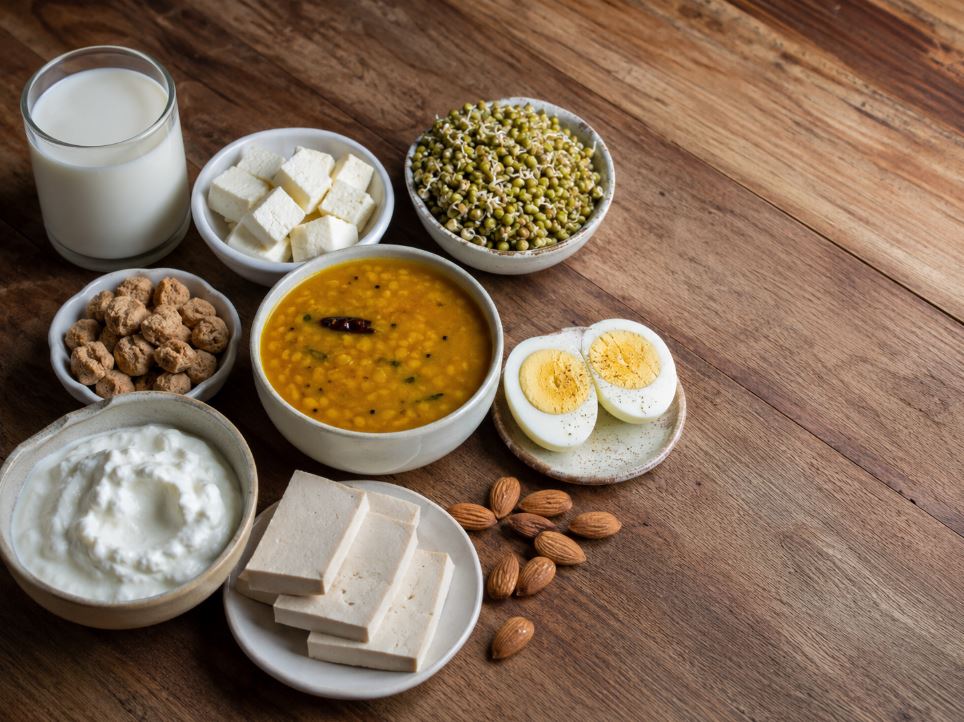
How to hit 100g+ of protein on a vegetarian Indian diet (the complete guide)
A practical, evidence-based guide to hitting 100g+ protein on a vegetarian Indian diet. Real foods, real katoris, three sample days, Jain and vegan notes.
Read