
Build a Beach-Ready Body: A Practical Guide
Looking good at the beach is a side effect of training and eating well — here's how to do both with a plan that actually works.


Editorially reviewed
Bassam Mallick · Last reviewed 26 May 2023
Master Nutrition Coach · MSc Kinesiology, Sports & Performance Nutrition · Lifestyle & Metabolic Medicine, Harvard Medical School
Most years, between February and April, the same conversation lands in my inbox more times than I can count. The Goa trip is in 10 weeks. The honeymoon in Bali is in 12. The college reunion at a hill station beach hotel is in 16. Could I, please, please, please get them “beach ready” in that window?
The answer I give is more useful than the answer they want. Yes — meaningful change is possible in 10–16 weeks. No — it almost never looks the way the panic version of the conversation imagines. The clients who actually arrive feeling good in beach photos are not the ones who fasted for two weeks before the trip and ate carrots and steamed chicken. They're the ones who built one clean strength + sustainable-deficit program in the first six weeks, used the next six to tighten the diet without breaking adherence, and gave themselves the last two as a slight refeed so they didn't show up dehydrated and depleted on the actual beach.
A beach-ready physique isn't about chasing an aesthetic ideal for someone else's approval — it's about showing up feeling strong, energetic, and genuinely comfortable in your own skin. The good news: the training and nutrition principles that get you there are straightforward, sustainable, and apply year-round. Here's how to build a body you're proud of, with methods grounded in exercise science rather than hype.
Start With Honest Goal-Setting
Before you touch a barbell or overhaul your diet, get specific about what you want. "Getting fit" is not a goal — it's a direction. Ask yourself whether you're primarily trying to lose body fat, add lean muscle, improve endurance, or some combination of all three. Each objective shifts your training emphasis and your nutrition targets.
Write your goal down with a timeline. "I want to reduce my body fat by 4–5 percentage points over the next 16 weeks" is actionable. It gives you a benchmark to measure progress against and a reason to stay consistent when motivation dips — and it will dip.
Design a Training Programme That Covers All Bases
A beach-ready physique is built on balanced, progressive training — not just endless bicep curls or hours on the treadmill. Your weekly programme should include:
- Resistance training (3–4 days/week): Compound lifts — squats, deadlifts, rows, presses — build the most muscle in the least time and elevate your resting metabolism. Isolation work for arms, shoulders, and core is a useful addition, not the foundation.
- Cardiovascular training (2–3 days/week): A mix of moderate-intensity steady-state cardio (brisk walking, cycling) and higher-intensity intervals improves heart health, supports fat loss, and aids recovery.
- Mobility and flexibility work (daily, 10–15 minutes): Stretching and foam rolling reduce injury risk and improve movement quality — meaning you can train harder and more consistently over time.
Progressive overload is the non-negotiable principle here: gradually increase weight, reps, or training volume over time. Without it, your body adapts and stops changing.
Fuel Your Body to Match Your Goals
Nutrition does the heavy lifting when it comes to body composition. The phrase "abs are made in the kitchen" oversimplifies things, but the core truth holds — you cannot out-train a consistently poor diet.
Focus on these fundamentals:
- Protein: Aim for 1.6–2.2 g per kg of bodyweight daily. This supports muscle repair and growth, and keeps you satiated. Good sources include eggs, chicken, fish, paneer, legumes, and low-fat dairy.
- Carbohydrates: These are your primary fuel for training. Prioritise whole grains, oats, rice, sweet potato, and fruit — especially around your workouts.
- Fats: Essential for hormonal health. Include nuts, seeds, avocado, and fatty fish. Don't fear dietary fat; fear a diet that ignores it.
- Vegetables: Aim for at least 4–5 servings daily. They provide fibre, micronutrients, and volume that helps manage hunger on a calorie deficit.
If fat loss is your primary goal, create a moderate calorie deficit of 300–500 kcal per day. Aggressive crash diets accelerate muscle loss and are hard to sustain — neither outcome serves you.
Leverage HIIT — But Don't Overdo It
High-intensity interval training is a powerful tool for fat loss, but it's a tool — not a magic shortcut. Recovery is where the real adaptation happens.
HIIT — alternating short bursts of near-maximum effort with brief recovery periods — is time-efficient and effective at improving both cardiovascular fitness and body composition. Two to three HIIT sessions per week is plenty for most people. More than that without adequate recovery leads to elevated cortisol, disrupted sleep, and a higher injury risk. Pair HIIT sessions with lower-intensity days, not back-to-back intense workouts.
Prioritise Recovery as Seriously as Training
Muscle is not built during your workout — it's built during the recovery that follows. Neglect this, and you'll plateau quickly and risk overtraining.
- Sleep: Target 7–9 hours per night. Growth hormone — critical for muscle repair and fat metabolism — is predominantly released during deep sleep.
- Hydration: Aim for at least 35 ml per kg of bodyweight per day, more on training days or in humid conditions. Dehydration impairs performance and recovery.
- Stress management: Chronic stress elevates cortisol, which promotes fat storage (particularly around the abdomen) and breaks down muscle tissue. Regular walks, breathwork, or any activity you genuinely enjoy can help regulate this.
Stay Consistent Through Challenges
Progress is rarely linear. You will hit weeks where the scale doesn't move, where work gets in the way of training, or where your diet goes sideways for a few days. These are normal parts of the process — not failures. What separates people who achieve their goals from those who don't is the ability to recommit after a disruption rather than abandon the plan entirely.
Tracking your workouts in a notebook or app keeps you accountable and makes it easy to spot when you've stopped progressing. Progress photos taken every 2–3 weeks often reveal changes that the scale misses entirely.
Key Takeaways
- Set a specific, measurable goal with a realistic timeline before you start training.
- Build your programme around compound resistance training, complemented by cardio and mobility work.
- Eat sufficient protein (1.6–2.2 g/kg/day) and maintain a moderate calorie deficit for fat loss — not a drastic one.
- Treat sleep, hydration, and stress management as essential parts of the plan, not optional extras.
- Consistency over months beats perfection over days — expect setbacks and plan to push through them.
The best beach body is simply a healthy, well-trained body that you've built through habits you can maintain. Start today, stay patient, and trust the process — the results will follow.
Get the weekly note.
Evidence-based nutrition + training, India-context, no fluff. One email a week from Bassam. Unsubscribe anytime.
Keep reading
- 🫒
The Mediterranean diet adapted for the Indian kitchen (complete guide)
The Mediterranean diet — the most evidence-supported eating pattern in the world — translated honestly into Indian kitchens. The trial evidence, what stays, what swaps, the oils, and a real Indian-Med day.
Read - 🍬
Sugar-free diet: what it actually means and how to do it honestly
What a sugar-free diet really means — added vs natural sugars, where sugar hides in an Indian diet (with grams), the three honest levels, and a realistic 30-day plan you can keep.
Read 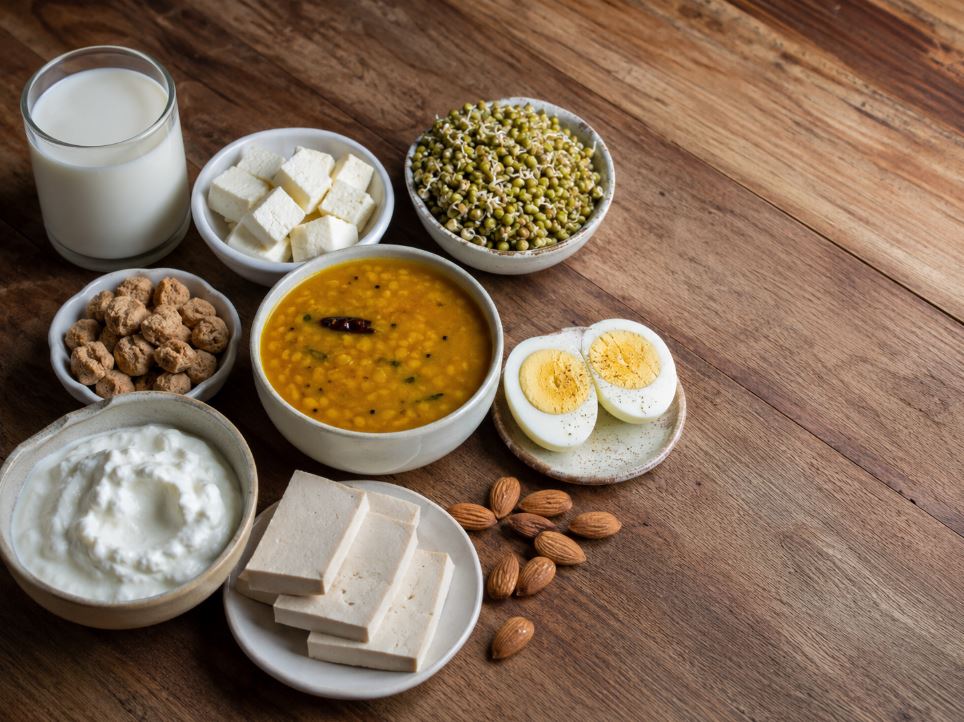
How to hit 100g+ of protein on a vegetarian Indian diet (the complete guide)
A practical, evidence-based guide to hitting 100g+ protein on a vegetarian Indian diet. Real foods, real katoris, three sample days, Jain and vegan notes.
Read