
Make Every Day No Tobacco Day: A Practical Guide to Quitting
Tobacco addiction is tenacious — but not unbeatable. Here's what the science says about breaking free, and how to make it stick.

Editorially reviewed
Bassam Mallick · Last reviewed 31 May 2023
Master Nutrition Coach · MSc Kinesiology, Sports & Performance Nutrition · Lifestyle & Metabolic Medicine, Harvard Medical School
Every coaching practice has its “why I'm here” clients. For me, one of the most common silent ones is the 42-year-old who has just had a wake-up call — a friend's heart attack, an annual physical that came back wrong, the realisation that their kids are now the age they were when they started smoking. Almost always, tobacco is part of the picture. Almost always, they've tried to quit a few times before and not quite stuck.
In 12+ years of coaching, I've stopped treating tobacco cessation as a willpower exercise. It's a system problem. The people who quit successfully don't grit their teeth harder than everyone else; they build a structure that quietly removes the cue, replaces the reward, and rides out the chemistry for the 6–12 weeks it takes the brain to recalibrate. World No Tobacco Day is a useful reminder, but the work that matters happens on the ordinary Tuesdays in between.
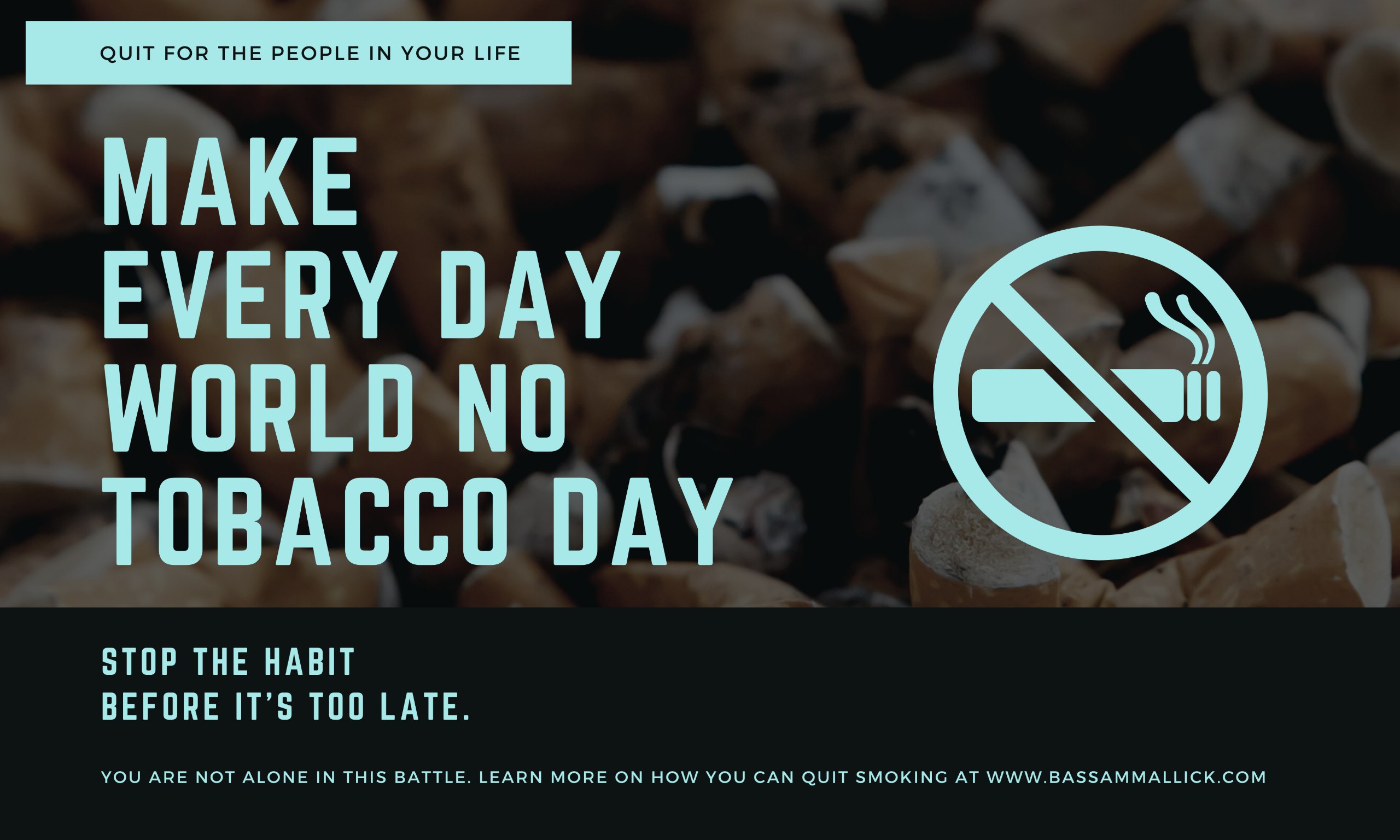
World No Tobacco Day arrives every 31 May, and for a few hours the internet fills with red-lungs infographics and well-meaning reminders. Then the day passes. If you or someone you love is caught in the grip of tobacco, one symbolic day was never going to be enough — what you need is a strategy that holds up on an ordinary Tuesday in July when the craving hits at 11 p.m. This guide cuts through the slogans and gives you that strategy.
What Tobacco Actually Does to Your Body
Tobacco smoke contains more than 7,000 chemicals, at least 70 of which are confirmed carcinogens. Regular use is the leading preventable cause of cancers of the lung, mouth, throat, oesophagus, bladder, and cervix. Beyond cancer, smoking accelerates arterial stiffness, raises LDL cholesterol, and roughly doubles your risk of a heart attack. Chronic obstructive pulmonary disease (COPD) — the progressive destruction of lung tissue — affects a large proportion of long-term smokers and has no cure, only management. Smokeless tobacco (gutka, khaini, zarda) is not a safe alternative; it carries its own high risk of oral submucous fibrosis and mouth cancer, conditions disturbingly common across India.
Why Quitting Feels So Hard: The Neuroscience of Nicotine
Nicotine reaches the brain within ten seconds of inhalation. It binds to acetylcholine receptors and triggers a dopamine surge — the same reward pathway activated by food and social connection. Over time, the brain downregulates its own receptors, meaning you need nicotine just to feel normal, not even good. This is the trap: you are no longer smoking for pleasure; you are smoking to avoid withdrawal.
Withdrawal symptoms — irritability, poor concentration, insomnia, increased appetite — typically peak within 48–72 hours and largely resolve within two to four weeks. Understanding this timeline matters. The worst of it is genuinely short-lived, even though it feels permanent when you are inside it.
You are not weak for finding this hard. Nicotine dependence is a recognised neurological condition — treat it with the same seriousness you would any other.
Evidence-Based Strategies That Actually Work
Nicotine Replacement Therapy (NRT)
Patches, gum, lozenges, and nasal sprays deliver controlled doses of nicotine without the toxic combustion products. Used correctly, NRT roughly doubles your quit rate compared with willpower alone. Combination NRT — a long-acting patch plus a short-acting gum or lozenge for cravings — is more effective than a single form. These are available over the counter at most pharmacies in India.
Prescription Medication
Varenicline (brand name Champix) partially activates nicotine receptors, blunting cravings and reducing the reward from smoking. Meta-analyses consistently show it outperforms both NRT and bupropion. Consult a physician — it requires a prescription and is not appropriate for everyone, but if you have tried quitting multiple times, this conversation is worth having.
Behavioural Support
Medication addresses the physical dependence; behaviour change addresses the habits and triggers wrapped around it. Cognitive Behavioural Therapy (CBT)-based cessation programmes help you identify your personal smoking cues — stress, boredom, social settings — and build specific responses to each. The iQuit India helpline (1800-11-2356) offers free counselling support.
Exercise as a Craving Tool
Even a brisk 10-minute walk significantly reduces the intensity of a craving in the short term. Regular aerobic training helps regulate dopamine and cortisol, addressing two of the core biological drivers of relapse. Start modest: a daily 20–30 minute walk is enough to make a measurable difference.
Building Your Support System
Quitting in isolation is possible, but it is harder than it needs to be. Tell the people you live with what you are doing and what you need from them — fewer cigarettes visible in the house, patience during irritable moments, a distraction when cravings strike. Studies consistently show that social support improves long-term abstinence rates. If your immediate circle includes active smokers, have an honest conversation about not smoking around you, at least in the early weeks.
Online communities — including several active Indian quit-smoking groups — provide round-the-clock peer support from people who understand exactly what withdrawal at 2 a.m. feels like.
Quitting for the People Around You
Secondhand smoke contains the same carcinogens as directly inhaled smoke, and there is no safe level of exposure. Children in homes where adults smoke have higher rates of asthma, ear infections, and slower lung development. If personal health motivation has not yet been enough to tip the scales, let the health of the people you share your space with add weight to that decision. Quitting tobacco is, among other things, a concrete act of care for them.
Key Takeaways
- Nicotine withdrawal peaks at 48–72 hours and largely resolves within two to four weeks — the hardest part is finite.
- Combination NRT or prescription varenicline significantly outperforms willpower alone; speak to a doctor about what suits you.
- Regular exercise reduces craving intensity and supports mood regulation during cessation.
- Social support — from family, peers, or a helpline — measurably improves long-term quit rates.
- Every day you do not use tobacco is a no-tobacco day; the goal is to string enough of them together that they become your default.
Quitting tobacco is not a single dramatic moment — it is a series of daily decisions that compound into a fundamentally different life. The cravings will ease, your lung capacity will begin recovering within weeks, and the mental clarity that returns tends to surprise people. You have everything you need to start today.
Get the weekly note.
Evidence-based nutrition + training, India-context, no fluff. One email a week from Bassam. Unsubscribe anytime.
Keep reading

Nourishing Ramadan: A Holistic Approach to Wellness
Ramadan is a chance to reset — physically, mentally, spiritually. Done right, it improves insulin sensitivity, metabolic flexibility, and clarity. Done wrong, it just slows your metabolism. Here's the framework.
Read
Embracing Compassion: Transformative Daily Practices
Compassion isn't a soft skill — it's a practice with measurable effects on stress, recovery, and long-term adherence to any goal. Two minutes a day. Here's the protocol.
Read
Be Humble, Be Grateful: The Foundation of Sustainable Change
Gratitude practice is the most studied positive psychology intervention. Three minutes a day, measurable changes in stress, sleep, and motivation. Here's the protocol and the evidence.
Read